Introducing Momentum Equations
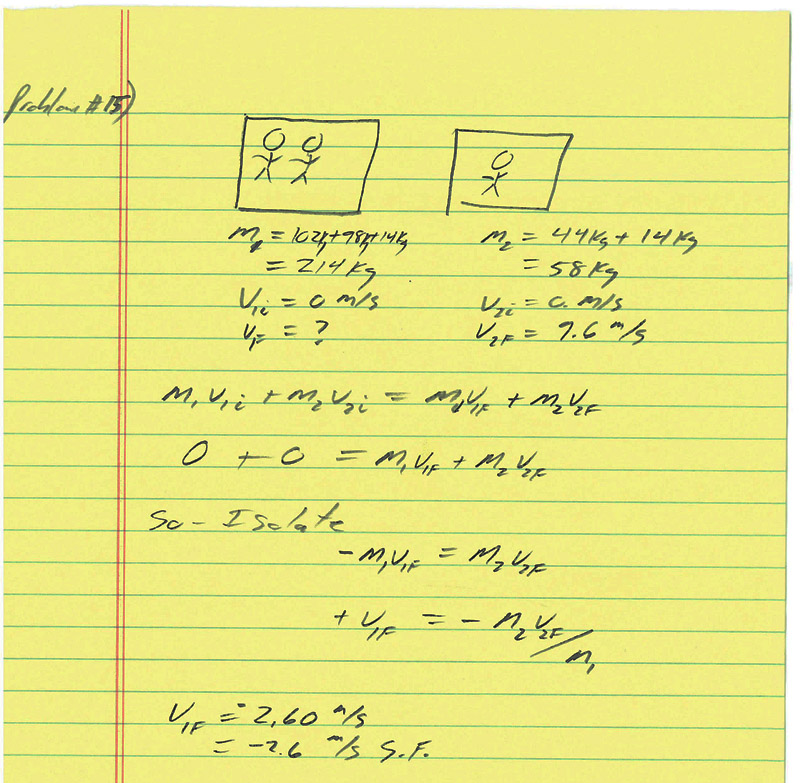
OPENING QUESTION: Please prepare a short 'lesson' on how to solve the trampoline problem.... you have ~5 minutes <go!>
LEARNING TARGET:
I will be able to solve intermediate momentum & impulse problems during today's class.
I will work on solving advanced momentum & impulse problems during today's class.
WORDS O' THE DAY:
- momentum (p=mv)
- impulse (∆p or F∆T
CALENDAR:
Lab Reports are Due looking Good and Standing Tall, Tomorrow (Friday, January 12th)
FORMULAE OBJECTUS:
p=mv
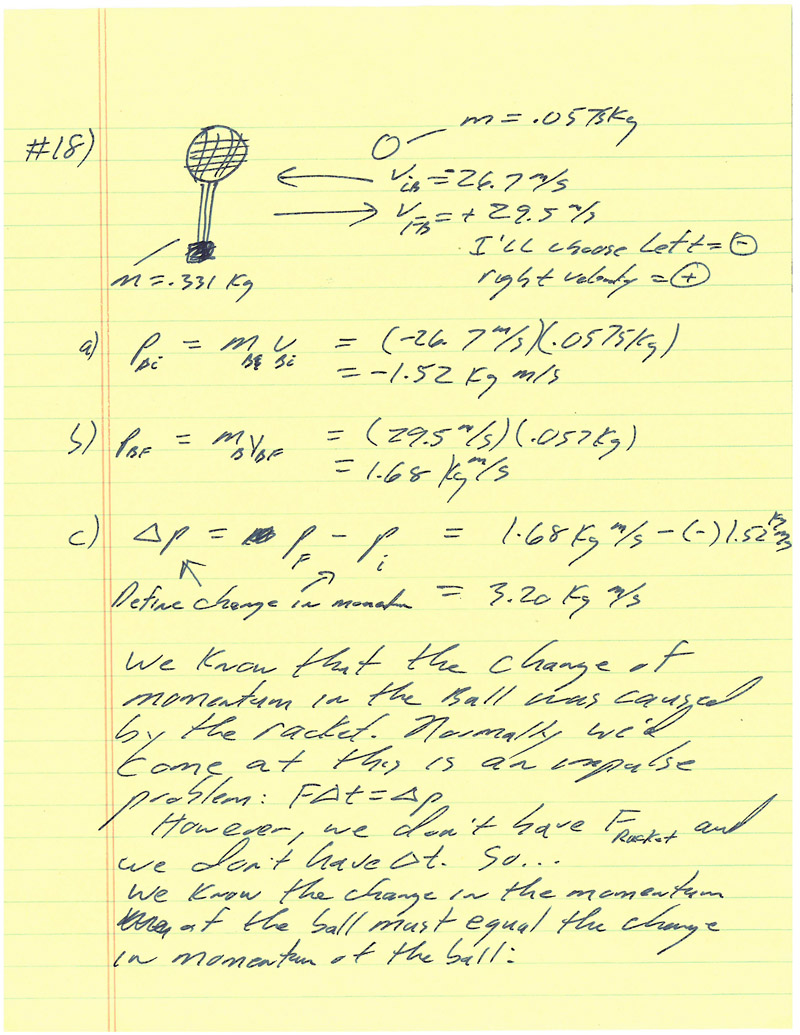
J = F∆t = ∆p = pf - pi = m(vf - vi)
m1iv1i + m2iv2i = m1fv1f + m2fv2f
WORK O' THE DAY:
Let's see if we can get some basic understanding of these collisions by using THIS fairly awesome PHET
═══════════════════════════
Let us continue working on these beasties from the Physics Classroom:
Please go to the PhysicsClassroom Website and commence to work on 3 of the first 9 problems.
A NOTE on inelastic collisions:
If two objects collide AND STICK together, we call that an 'inelastic' collision. We call it that because the objects don't perfectly bounce apart (perfectly elastic!).
Imagine a vw bug in a head on, high speed collision with an 18-wheel semi rig. The VW bug will stick to the semi and the semi will continue moving forward with *most* of its original momentum intact.
In those (inelastic collision conditions), the momentum equation is adjusted as follows:
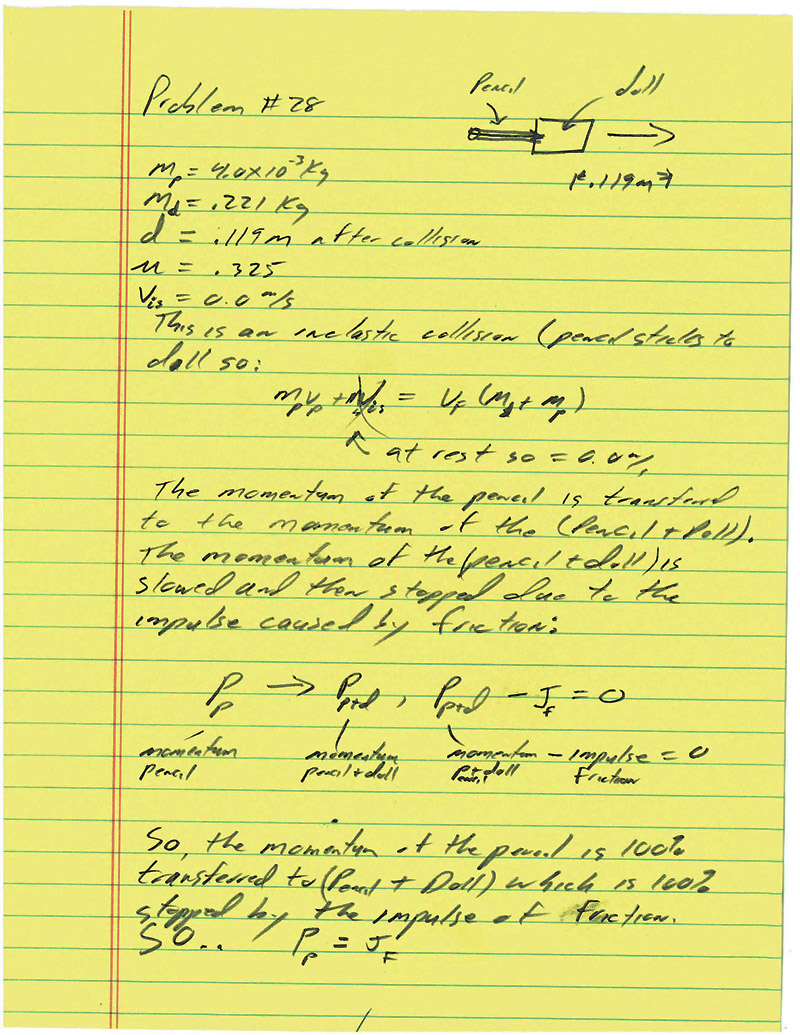
m1iv1i + m2iv2i = (m1f+ m2f)(vf)
Since the objects stick together (we MUST assume that no pieces fall off during the collision!), the mass of the final object is equal to the initial masses of both objects)
We'll continue with these problems tomorrow:
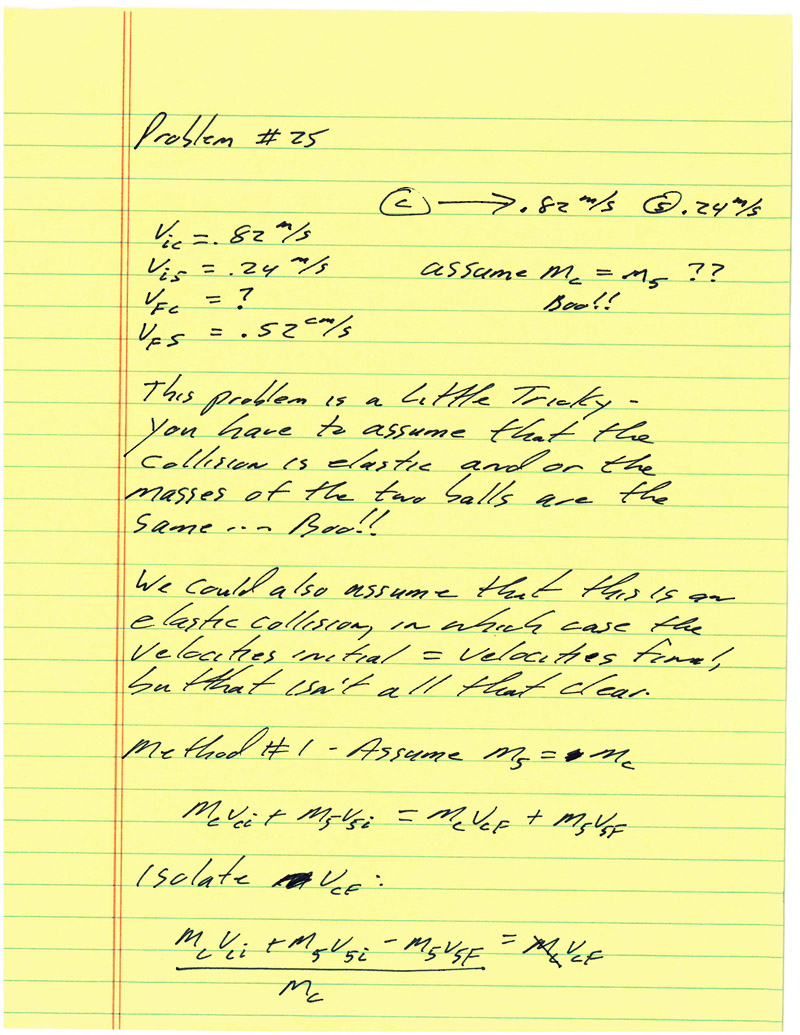
Problem 25 Setup and First Page
Problem 28 Setup and First Page
Problem 29 Setup and First Page